
You'll still need to have that Windows PC acting as an intermediary, but folks looking to use Google's Cloud Print service now at least have considerably more devices at their disposal to print documents from. Following up its roll-out to Chrome OS netbooks last month, Google has now announced that it's begun rolling the service out to its mobile Google Docs and Gmail sites, which you'll be able to use to print documents from most mobile devices that supports HTML5 -- those running Android 2.1+ or iOS 3+, for instance. What's more, while you will still need that Windows PC connected to your printer for the time being, Google now notes that both Mac and Linux support are "coming soon."
MeeGo Linux hacked to run on Google Nexus One, other Android phones

MeeGo is a light weight Linux environment designed to run on netbooks, smartphones, in-car computers, and other devices. The source code for the smartphone version of the OS was released a few months ago, but you still can’t actually walk into a store and buy a phone running MeeGo yet. A small group of hackers, on the other hand, are working on getting the OS to run on existing handsets including the Google Nexus One.
Android Police reports that a number of hackers have managed to get the OS to boot on the Nexus One, HTC Desire, and Dell Streak. The thing all of these systems have in common is the Qualcomm Snapdragon QSD8250 chipset. Unfortunately while that chip features 3D graphics acceleration capabilities, the drivers are closed-source, which has prevented third party hackers from figuring out how to add 3D graphics support. That means that while you can boot MeeGo on these phones, the OS is excruciatingly slow to actually use.
Eventually we may see handsets ship with MeeGo, and odds are they’ll run much more smoothly. But if the driver issues can get worked out, it’d be awfully cool to be able to dual boot MeeGo and Android on existing phones.
ADWLauncher EX 1.2.2 Released, Available In The Market
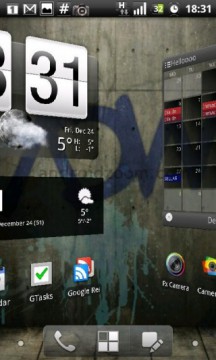
ADWLauncher, a well known and popular home screen replacement app, developed by AnderWeb, is getting a bit of a makeover. Actually, more of a “new version”, as the developer has now released a paid version of the app, dubbed ADWLauncher EX, or as I like to call it, ADW on crack.
Caribou Android app opens doors over the internet needs neither permission nor keys

Opening doors with wireless RFID cardkeys is old hat at this point, but opening those doors with a smartphone is rather more intriguing. Doing so without permission of the people who put the locks on the doors, well, that brings things up to a whole new level of awesomeness. That's what Caribou does, a little Android app that remotely connects to a server managing the locks at a supposedly secure location. The app then diddles the ports and security settings of that server until it finds the magic phrase and, in a couple of seconds, it's open sesame time. Doors are unlocked remotely and then, 30 seconds later, automatically locked again. How thoughtful.
Android 2.2 is now the dominant version of Google's OS with 61.3 percent of all active devices

Considering that we're about nine months removed from Google's release of Froyo, you'd expect that version of its mobile OS to have been distributed quite widely by now and indeed it has. 61.3 percent of (the many) active Android devices -- handsets and tablets, anything with access to the Market is eligible -- worldwide are now running version 2.2, making it the most prevalent iteration of the software at the moment.


No comments:
Post a Comment